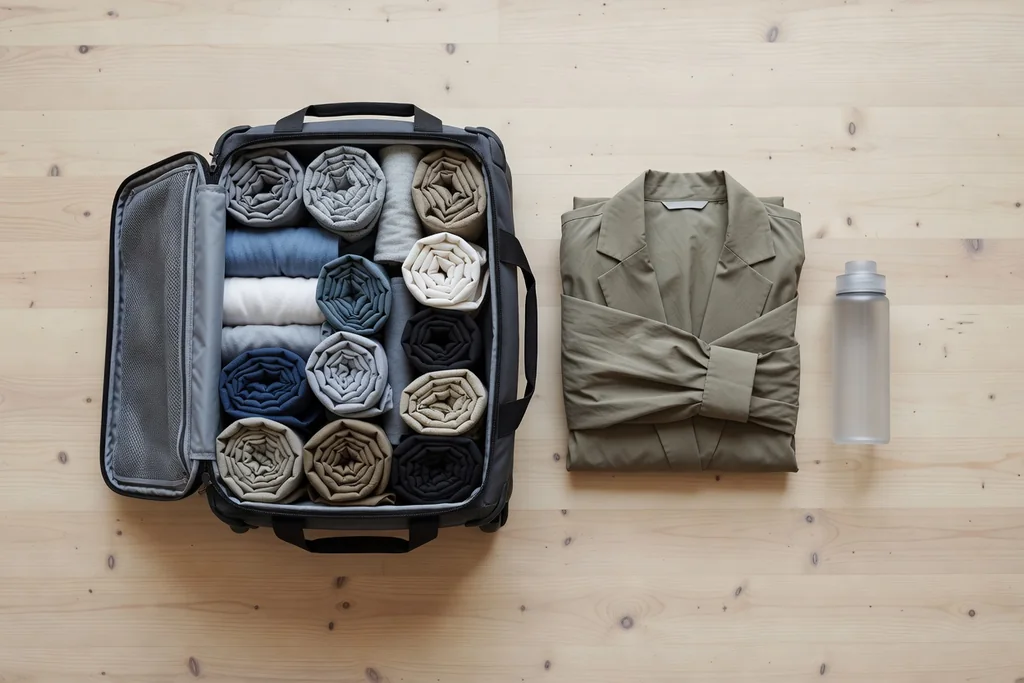
Long intercity coach journeys in Pakistan reward light, thoughtful packing far more than they reward a heavy suitcase. Space on board is limited, the air conditioning can swing between cold and warm, and the items you actually need are almost always the small ones you can reach without opening the luggage hold. A sensible approach is to decide first what goes in the hold, then pack a small bag for the seat with everything you may want between departure and arrival. This guide sets out what is worth taking, what can safely stay behind and how to keep the whole thing manageable. The general rules on baggage and boarding are set out in our terms and conditions.
Start With the Layers
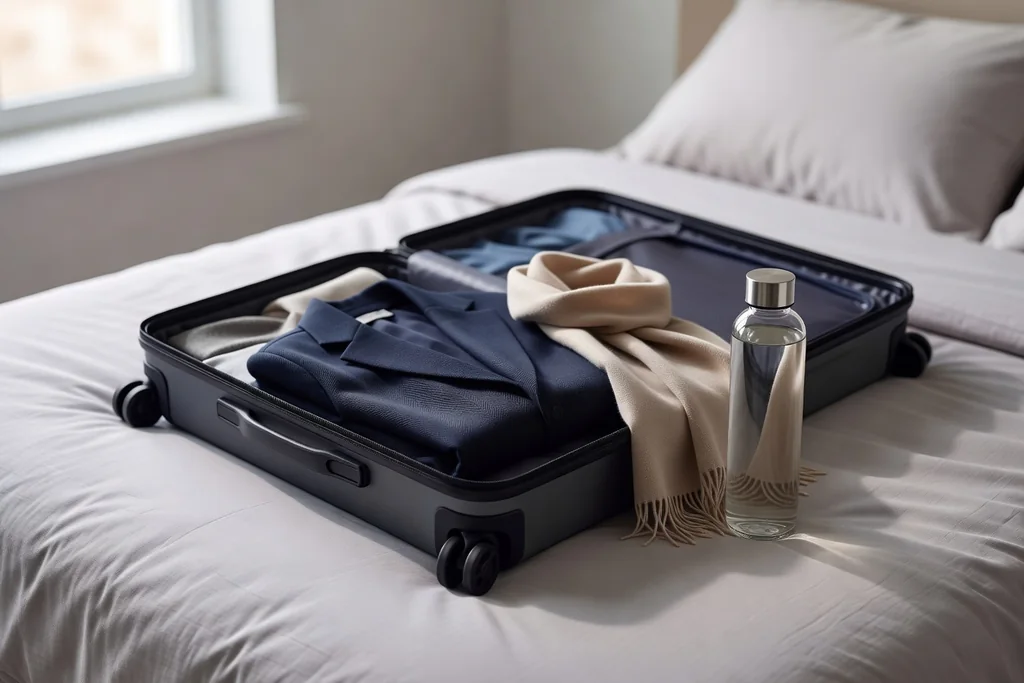
Coach air conditioning is efficient, and an overnight service can be genuinely chilly even when the day outside was hot. The simplest solution is to dress in layers you can put on and take off, with a light jacket or a thin shawl on top of a breathable shirt. Comfortable trousers or a long skirt in an easy fabric make a long seated day much more pleasant than stiff clothing. A pair of flat shoes and a spare pair of socks are small additions that make a real difference on a full-day journey, and a scarf doubles as a pillow or a cover if the coach is cold while you sleep.
Water, Food and Comfort
Water is the single most important item in your seat bag. A full bottle keeps you going between refreshment stops, and refilling it at a service area is usually easy. Simple, dry snacks such as biscuits, nuts or fruit travel well and are far more convenient than anything that melts or spills. Most departures make at least one stop where tea and basic food can be bought, but that stop is not guaranteed on every route, and a passenger who depends on it may be disappointed. A small packet of tissues, hand sanitiser and a fresh face wipe cover the small practicalities that arise on a long day on the road.
Documents, Tickets and Money
Keep your ticket confirmation and a photo identity document in the small bag you keep with you, not in the hold, because the crew may ask to see them before boarding. A little cash is worth carrying for tea, snacks, a rickshaw at the other end or a tip for someone who helps with luggage, since card readers are not universal in the smaller towns. Photocopies or photographs of important documents held on your phone add a useful layer of backup. If you are travelling with medicines, keep them with you and carry enough for the whole journey plus a margin for delay.
Entertainment and Power
A charged power bank is the most useful piece of technology you can pack, because sockets on board are not available on every coach and are in demand when they are. Headphones let you watch or listen without disturbing the passengers around you, and downloading films, music or podcasts before departure means the journey passes comfortably whatever the mobile signal is doing. Our guide to preparing your devices for onboard Wi-Fi explains how to use a shared, variable connection sensibly. A short charging cable and a spare pair of headphones are cheap insurance against a long, quiet journey.
Keeping Luggage Manageable
A few packing habits keep the whole trip simple. Roll soft clothing rather than folding it flat, because rolled clothes use the space in a suitcase more efficiently and crease less. Put anything you might need during the journey in the small bag and close the main case once, rather than opening the hold luggage at every stop. Weight matters more than volume, since you will be carrying the bag yourself at both terminals, and a suitcase with wheels saves more energy over a long transfer than it costs in the packing. Finally, label the outside of your main bag with a phone number, so that it can find its way back to you if it is ever separated from you:
- roll soft clothes instead of folding them flat;
- keep a change of clothes and medicines in your seat bag;
- pack the heaviest items nearest the wheels in a wheeled case;
- leave books, bulky bedding and heavy electronics behind if you can;
- put a phone number on the outside of the main suitcase.
A Final Check Before You Leave
Before you leave home, run through the same short list every time: ticket, identity document, cash, phone, charger or power bank, water, a warm layer and any medicine you need. Everything else is a comfort rather than a necessity, and if it fits in the hold it can be forgotten until you arrive. Travellers who pack this way spend far less time worrying about their luggage and far more time enjoying the journey. For the practicalities of boarding, baggage limits and what may be carried on board, keep our onboard Wi-Fi terms and the general conditions to hand as well.
| Category | Worth taking | Why it matters |
|---|---|---|
| Clothing | Light layers, a jacket or shawl, flat shoes, spare socks | Air conditioning is cold and journeys are long |
| Water and food | Full water bottle, dry snacks, tissues | Refreshment stops are not guaranteed on every route |
| Documents | Ticket confirmation, photo identity, document photos | May be checked before boarding |
| Money | A little cash in small notes | Useful for tea, snacks and local transport on arrival |
| Power | Charged power bank, cable, spare headphones | Onboard sockets are not available on every coach |
| Main bag | Wheeled suitcase, labelled, packed in rolls | Easier to carry and to identify at the terminal |
Pack in layers, keep the essentials in one small bag within reach, never travel without water and a charger, and even the longest intercity coach journey in Pakistan becomes a relaxed and comfortable trip.